Wednesday, April 23, 2014

The Color of Night

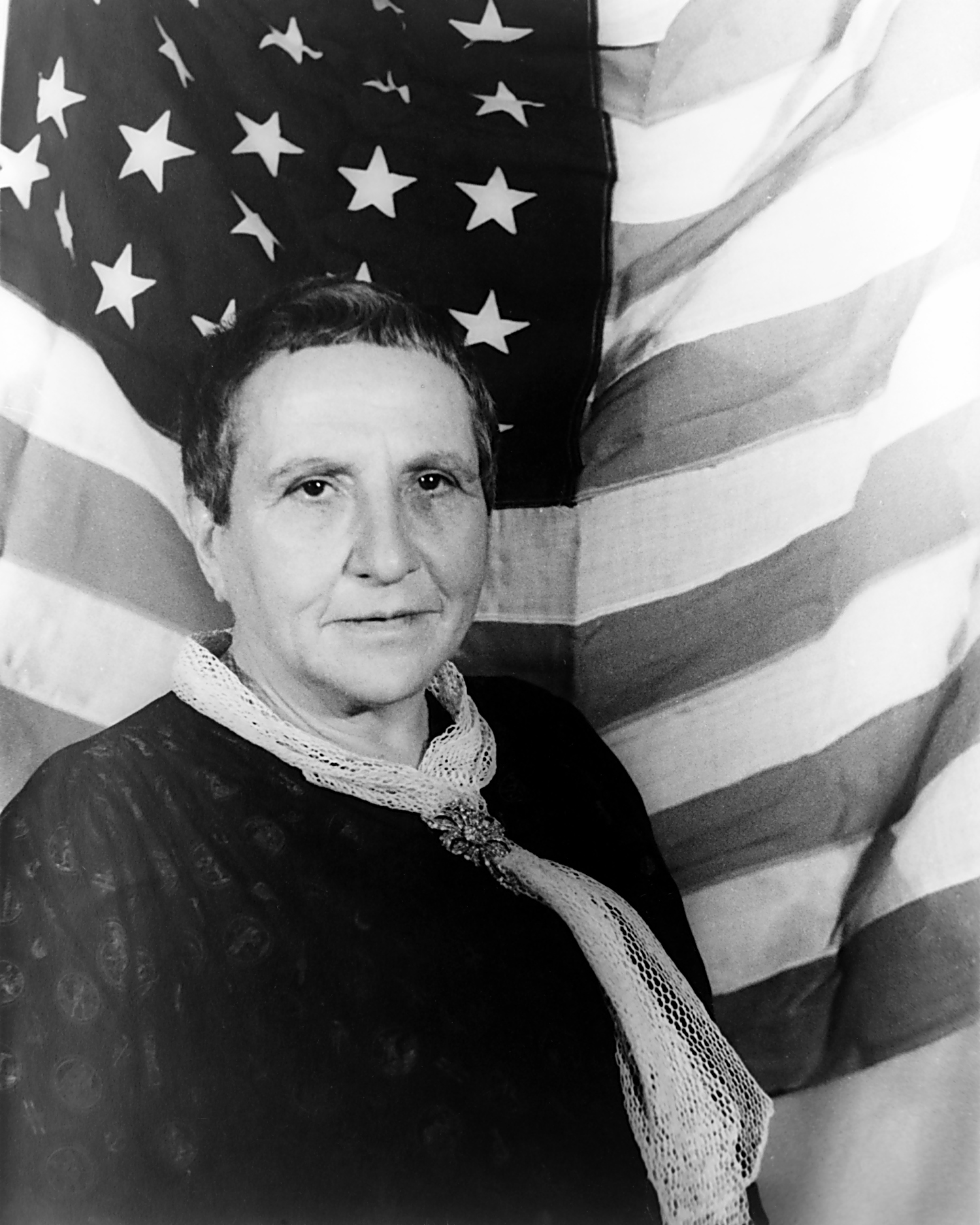
ecrivain.jpg (47782 bytes)The Color of Night - Madison Smartt Bell

Mae: a lone wolf, who got raped by her brother as early as 11. Her relationship with her mom and parents in general is non-existent. She seems to scorn her mother. She is in a sort of gang: the people, the One; they steal, they kill and do piggedly-diddedly, while on drugs. She is obsessed with 9/11 and seems to want to understand the destruction. She nearly escapes with her life several times (for example she avoids the raid that takes in the One). Her purpose is to tell her story. 


Terrell: Mae's sadistic brother who uses Indian lore to torment his sister and rape her. He impregnates Mary Alice in high school, marries her, has two kids and goes off to the army. He comes back with honors, but eventually, he ends up being shot by the SWAT. he has already killed his whole family by that time.


Laurel: She is Mae's lover, though she drifts off with other people such as D, Ned, O... She is Mae's accomplice. In the end, she has a job as a secretary but she is dying of ovarian cancer; maybe due to her past life. 


O: seems to a modern day Orpheus and his Eurydice is Eerie. He is always writing songs for her, and after her death he doesn't stop, which leads to his death by Mae and Laurel. He is beautiful, and he has a stint with Laurel in Malibu which leads to her having a child.


Ariadne: O and Laurel's daughter. She is in her 30s by the end of the book, and is very pretty.


Eerie: she is O's girlfriend and he seems serious about her; he is upset when she sleeps with someone else, and when she dies in a not so innocent accident in a motel, he is crushed. She is of an unimaginable beauty, unapproachable.


D: The boss of the operation, who enjoys debasing others, making them sleep with anyone (such as Ned), making them kill people. His eyes capture Mae, but she knows she and everyone in the group is just a pawn in his twisted scheme. He ends up being arrested.


Mary Alice: Naive schoolgirl who ends up being Terrel's wife. He kills her and the two kids after he goes crazy.


Mother Thing: only seems to be referred to by Mae as a woman who doesn't care much of anything, smokes and doesn't do much; she makes Mae feel dirty as if everything were her fault.


Constant references to Greek mythology; Mae always refers to other people as mortals. She brings up the myths of Persephone, Acteon, Selene.....


Serial Killing in America After 9/11 - David Schmid


The serial killer and terrorist roles merged with each other. Before 9/11, the serial killer was predominant in American culture, but the creation of the terrorist allowed America to see itself as a victim only--> America and the Other. The serial killer, as demonstrated by rise of movie genre franchise, offers a perverse comfort for people to avoid thinking about implications of terrorism. Freud suggested the popularity of serial killer movies is a coping method for people to deal with their own death via fiction. 9/11 was first considered an act of terrorism and then an act of war. It justifies the offensive on terrorism and the countries being attacked as a result. By using the term of terrorism and making it a product of a diseased mind, it allows America to ignore that terrorism may be provoked by some sort of legitimate reason to the Arab world. The DC sniper case made confusion between serial killer and terrorist even bigger. Led to creation of term "domestic terrorism". Baton rouge murder cases show mentality regarding the two terms, how it's ritualistic and falls back into pre-determined categories in people's minds. Despite shift in culture after 9/11 of serial killer as being a tribute of Americana it led the people to think that other culture is embodied by violence, per Zizek's statement of "the other being a distilled version of our own essence". The last statement in the article summarizes the whole issue: "Serial Killers are Us but only in a way that reinforces the Gap between Us and Them."


Wednesday, April 16, 2014

David Lynch

David LynchPervert in the Pulpit: The Puritanical Impulse in the Films of David Lynch” - Johnson Jeff

He explores the concept of innate depravity; a Zoroastrian notion of good and evil. His villains are drawn from archetypes of American fiction. Spirit of reform and inverse Protestantism; focus on individual battle. Guilt and sin are main preoccupation of American writers. Lynch uses idea of American Gothic: nostalgia, irony and cliche. Lynch uses form of Calvinism; Romanticism where Man has a dark relationship with the world. Artistic intensity in Lynch's world, but there is a Manichean ideal of two opposing worlds of good and evil. Simple structural codification which critics have a hard time analyzing; either they get too hung up on imagery and aesthetic quality, or the moralization of the work. Some critics argue Lynch infused his works with Sincerity and sentimentality, that moralizing was just a bypass. Lynch executes Abrahamic justice against villains in works. He is anti-intellectual, cleanliness is an image/ideal of a corrective for love and strife. His films disrupt narrative linear form, but he uses familiar material to challenge viewer. His characters who escape traps of logic must still resist assimilating with a culture who restrains their identity. His characters both crave and resist assimilation.


http://www.theopedia.com/Manicheanism

Because Manicheanism is a faith that teaches dualism, in modern English the word "manichean" has come to mean dualistic, presenting or viewing things in a "black and white" fashion.

"David Lynch Keeps His Head" - David Foster Wallace


Ambiguity in his movies about morality and identity is purposeful. That is what makes viewers so uncomfortable.


Blue Velvet

Wednesday, April 9, 2014

Recyclopedia

Recyclopedia - Harryette Mullen

"Trimmings"


Objects


"S*PeRM**K*T"


Foods


Wanted


"Tender Revisions: Harryette Mullen’s Trimmings and S*PeRM**K*T" - Deborah Mix


Relationship between Stein and Mullen; how Mullen got inspired by Stein: prose/poetry form, the woman space and domestic space/consumer space. Mullen used critiques of white femininity from Stein to make her own critiques about womanhood and consumerism in all shapes. She perpetuated and brought to life African American style of experimentalism in post-modernism and modernism. Mullen's poem "A Petticoat" is compared to the "Olympia" painting by Manet. Makes a point about showing how white femininity is superior to black femininity which hovers in the background with "bright white colors", while the white nude woman stares at the viewer. Mullen also strengthens role of ink in her poem by using flimsy adjectives to describe the white woman. She gives more concrete power to the woman made of "ink". She teases the social and literary conventions at the time. Arguments about Stein being racist despite her claims that she isn't. (she supposedly subjugates black women to white writing). But Stein through her very identity as a Jew and a lesbian makes that issue even more complicated. Mullen tries to deconstruct stereotyped and racist words. Some of her poems follow several threads denoting fusion and conflicts between white and black culture: "one thread of the poem follows traditional American signifiers", " But in another thread, jingoistic colors edge into other kinds of coloring", "And a third thread traces again the (dis)connections between black women and traditional femininity", "And a third thread traces again the (dis)connections between black women and traditional femininity." Makes an argument that Mullen is trimming away the scraps of Stein's style and content, and using the scraps of marginalization to make them central in her poems. She also uses trimming offs of history, letting complex relationships between cultures come to light. Mullen explores "contradictory pressures on women" in several of her poems; she also uses words and themes laden with contradictory connotations, making readers think on the role of feminity as a whole, not only by race. Also "Mullen provides an illustration of this conflation of violence and femininity" in poems like the pocketbook. In S*PeRM**K*T, Mullen uses material and sexual desire and pleasure and pain to show the commodity of the marketplace and the place of the woman in it. Then the article explores topics of advertising and consumer appeal: the image of consuming the 'perfect' food to become perfect; the image of the desirable white baby on products. Yet she also hints at less desirable images like goo . SHe unveils the culture's obsession with "surface order and control" while showing forces that break that control. The control is directed to people of race and women. Talks about the contradictory nature of how Western culture views sex---> commodity of women and grocery store allusion. Women need to be sanitized,men don't. Women's sexuality is focused on cleanliness and home, men's sexuality is not contained. The article also mentions the people who refuse to consume: anorexics and their marketed image in the media yet there are starving people in the world. The consumerism also alludes to white and black relations under slavery.

Sunday, April 6, 2014

Venus

Venus -Susan Lori Parks

First scene:
https://www.youtube.com/watch?v=4_KCCd_GO4Y

Disappearance of identity : Venus is rarely called by her name Saartje. Always either as the Girl, or the Venus of Hottentot.


Critics: they say that Parks softened version of true events; instead of having an addiction to chocolate Venus became an alcoholic. Also, her greed for money, “being her own accomplice” to her condition is implied. Instead of going to Paris, she was exhibited in a shed. Greg Miller tries to show how Parks’ works show a theatre of potentiality, rather than of derivative being. In minor literature, everything is political.


Critics and style: She doesn’t simply talk about colonialism. View of Parks’ works are “collective assemblage” or minor language where her language is more meant to convey, sensations, coexistence of view points than anything else. Point out examples of  the Chorus, the Negro Resurrectionist, the Venus and the Showman….Depending on who is saying the lines, a different meaning is given through the context.


Style of Parks: Usually her plays are abstract, but Venus is a little more real based ex: notes read out loud. "Rep & Rev," short for "repetition and revision," is a term Parks uses to
describe a style in which characters repeat phrases throughout a given play. She uses jazz as inspiration.
Different characters are played by same actors; through time the characters come back together. She enjoys writing about holes; of cramped space; wherever Venus goes, it’s in a confined space; even when she is with the doctor, that space is spooky to him. Also, holes in a more physical sense: her butthole, her vagina is alluded to so often by the people regarding her.


How Parks wrote the play as a mirror; although the narrative itself is in chronological order, the scenes are in backward order. Time is convoluted. The future was written before the past…
The theatre of Suzan-Lori Parks suggests new "lines of escape," new ways of  addressing the destructive desires of colonialism and its heirs.”


Complexity of oppressor/oppressed: multi-meaning in her plays including this one. There is no clear cut villain and hero. “double function of writing”. How the audience as well is complicit in the events that took place; they took objectify Venus and desire her. Colonialism capitalism through past and present. Venus is the desired object yet, she is “dominated by gaps, holes”.
She blurs the line between spectators: there are spectators in the court, at the freak show, at the Academy.


For all the mention of love (Venus, goddess of love, and the doctor’s insistent “I love her”, there is an absence of love. “The Baron Docteur's version of "love" proves merely another gesture of
oppression, a perverse fann of desire that injects death into love's hole and so hastens the Venus' decline.” There is space teeming with lust and desire, but no love. The desire is multi-faceted like all else: capitalist desire, fascist desire, bureaucratic desire….
Colonialism shows how it perverts Love: anything pertaining to love is destroyed eventually; the pregnancies, the liaison with the doctor. Sex is linked with death: “masturbation/maceration/mastication - wherein desire and death intermingle.” Colonial depersonalization: she is referred by the doctor briefly as a girl, but in his notes, she becomes a creature, a thing, her body verbally dissected for all to see. Despite the fact that she has talent, the doctor, to reassert his male and white power, dumbs her down to the chorus. Mother Showman did it too. Even a little glimmer of humanity needs to be made up by depersonalization.


Reason for the use of chocolate: Chocolate functions within the play as a drug, as a symbolic “profession of love”. → refer back to historic event where postcards were sent with coffee, depicting languor, refreshment. The chocolate also shows the decline of the world via colonialism: how the chocolate was lightened, how the “nipple of Venus” was enslaved,


[Backstory of the beginning of the play: Venus’s temptation and degradation; the Negro Resurrectionist, the 9 Wonders, the trial where Venus herself lets Mother Showman off the hook for money and hope. The love affair with the doctor coupled with opportunism; the blackmailing, the sickness, the death. ]


Trailer: https://www.youtube.com/watch?v=xE2lIZwMx2M